

Documentary · 52 min · In development
The People We Disappear
On the Opal Coast, where borders are crossed at the risk of one’s life, people in exile, fishermen, rescuers and ordinary residents tell the same story: that of men and women whom our migration policies want to see disappear, to the point of erasing their traces, their bodies and their voices.
Synopsis
On the Opal Coast.
Words travel between people in exile, fishermen, sea rescuers and many residents who face a silent tragedy every day. A chain of voices that rebuilds bonds within a fragmented, suffering humanity. This immersive and intimate documentary looks at the way our migration policies produce many forms of disappearance, administrative, spatial, psychological and symbolic, and at how, through the presence of bodies, faces and voices, cinema can perhaps make a simple hope heard.
An Arturo Mio production · With development support from Pictanovo, the CNC and Procirep-Angoa
Director’s statement
Victor Desmettre
And finally, to question this border that kills.
In 2017, on a whim, I decided to follow Ambre, a friend who volunteered with an association, to a camp that had just been set up with the backing of local elected officials, the Grande-Synthe camp. I grabbed a backpack and slipped into their car, almost unannounced. I had no experience of charity or humanitarian work; I just knew that help was needed there, and that I was free for those two days. Over those two days, I met a great many people. The camp, which was still being built, marked a turning point in humanitarian aid policy, thanks to the mayor of Grande-Synthe, who had acted as a legal shield by offering exiled people a plot of private land.
That experience, and the ones that followed over the past eight years, helped me shape a particular way of seeing exile and the journeys of these men and women, far from the stories told by the regional or national press. First-person stories with no political agenda, and no biased narratives about “migration flows”, “pull factors”, or the people we call “migrants”, terms which, as we know, erase the intimacy of a face or of an encounter.
Read the full statement
Our gaze and our empathy become more anecdotal when a word and what it carries end up reducing the complexity of what makes a person to their mere legal status. In 2022, I decided to go back to the Opal Coast, this time to document the “coastal outreach patrols”. That subject, though I did not know it yet, would lead me to make Entre les frontières (Between the Borders), a documentary series of 4 x 20 minutes that follows a humanitarian association in its emergency missions. It is a first film that bears witness to a shipwreck in December 2022, which left 4 dead and 5 missing at sea.
During that shipwreck, I learned that there are two figures to remember: the number of dead and the number of missing. But I have since learned that, under the policy of the maritime prefecture that coordinates sea rescue operations, there is a third. Unlike the International Organization for Migration (IOM), the maritime prefecture, during rescues at sea, sets its number of missing at the number of people the rescue teams see disappear in the water, and does not rely on the accounts of the survivors.
The semantics of disappearance then take on a new meaning: there are the bodies found after a shipwreck, “the deaths”; the bodies the authorities see disappear, “the disappearances” (perhaps to be found on a beach a few days or weeks later); and there are the people who are erased from these figures, the bodies nobody counts, who exist only in the memory of those who shared the disaster of a shipwreck, the people “we make disappear”.
On a trip to Calais in December 2024, a father called out to me and asked me to film his 9-year-old son, who was kicking a ball around with other kids from the camp. The boy came over and lifted his jumper to show me his stomach, ravaged by burns from a last attempt to cross the Channel. His father explained that a fuel leak had reacted with the boat, which was in poor condition, and that the boat’s inflatable tube had exploded and burned his son’s stomach.
He told me that when the boat was rescued, there were about forty people on board (43 according to the press), but he insisted that the passengers had counted themselves at departure and that there were 66 of them. Some twenty people would therefore have disappeared at sea that night. During the 4 days I stayed, 6 bodies were pulled from the water or found on the beach. That is when I realised that numbers say nothing; they do not tell these life stories, these tragedies, these hopes crushed with every failed crossing. So I finally decided to do what seemed most important to me. To listen to these men, women and children in search of a better life. To listen to their voices say, in their own words, what brought them here, stopped by this liquid border that separates them from a dreamed-of land, England! Hearing a voice tell a life, a family story, life “before”, gives flesh back to the person speaking. As do their accounts of those who left and never arrived. Or who no longer call. Those whose names no longer appear anywhere.
Quite quickly, it seemed obvious to me that a new film was taking shape, one that would demand a new point of view, and this time I felt ready and experienced enough in the field to immerse myself in the camps, positioning myself in a way better suited to the subject of the film. By placing the testimonies and lives of the people in exile I meet at the heart of the narrative, the documentary is also built through the prism of disappearance. I am not trying to investigate disappearances at sea, but rather to make visible the processes that make tragic situations disappear from our sight, situations we then stop seeing and recognising. The gaze and experience of exiled people bear witness to these phenomena of disappearance.
There are other important testimonies that are regularly overlooked: those of the fishermen on the front line of this tragedy, traumatised at having hauled up the bodies of drowned migrants in their nets. And there are also the residents of Calais, Grande-Synthe, Wimereux and now Cayeux who, every day, witness the deadly ballet of departures on the beach. I also want to make heard voices that speak of solidarity and mutual aid.
And finally, to question this border that kills.
Victor Desmettre
That is when I realised that numbers say nothing; they do not tell these life stories, these tragedies, these hopes crushed with every failed crossing.Victor Desmettre · director’s statement
Approach and characters
The characters →Beauty and danger. All the contradictions of a territory
It all begins with discovering the coastline of the Opal Coast. There is a particular atmosphere there. In June, at the very start of summer, before the holidaymakers arrive in numbers, a few women and children enjoy the still-empty beach. In the distance, you can make out the English coast. When I run on the beaches of Calais, I remember being a child, when my mother and my aunt often took us there on a whim, because it was never far.
And yet, I only have to look at my feet treading the sand for another reality to unfold. My shoes disturb the map of the tragedies the last few nights have left on the beach. I step on tear gas canisters, I stride over punctured boats, and I watch clothes on the sand lying next to the seashells of my childhood.
I have to realise and accept that, however beautiful it may be, the Opal Coast harbours a schizophrenic beauty. On the same beaches where mothers and their children enjoy the summer, other mothers and other children endure the violence of exile. Tear gas, destroyed clothes and scattered belongings are their daily life.
Every year, tens of thousands of people try to reach England in the hope of a better life, or out of despair at the one they are leaving behind. Every year, dozens of people die trying to cross this unpredictable sea in makeshift boats. Along the coast, camps spring up every day and are destroyed just as often. Made invisible, kept in extreme precarity, people in exile tell a different story from the one on the postcards. They tell the story of a humanity that suffers, of another that helps, of communities that form and fall apart, and of others that ignore each other.
An immersive camera
When I started thinking about how to film, one thing was obvious: it had to be simple and effective.
- Simple, because I had to be able to take it everywhere with me, all the time, even when I could not film. The camera had to be part of me; people had to see me and recognise me with my backpack in the camps and among the associations, so that when the time came, when we were all ready, the camera would not be a stranger to the situation.
- Effective, because to make immersion easier, I had to be self-sufficient and handle everything, both the images and the sound. The camera must not be an obstacle or intimidating, all the more so as it had to move through difficult, watched or forbidden places.
Read more about the approach
The first weeks of immersion were difficult because, even when encounters happen, few people agree to speak with their face visible, for fear of being recognised. For many of them, their families do not know the hell they are living through here: so as not to worry them, they claim the conditions are decent, that they are housed and fed, when in fact several of them sleep in one tent on waste ground or in thickets, and getting food is not easy.
And then, when the encounter happens, when the person trusts you and no longer cares about being recognised, you still have to be available to follow them through an erratic life. The smugglers’ underlings, who run the camps and the departure groups, strictly forbid outsiders in the camps, and I was refused access many times. Since these places are also places where people live, you have to be discreet to manage to bring a camera in so that the story can be told.
Yet when the camera is with people, it favours long takes, looks, speech. Even if I feel stress or pressure while setting things up, when I film, time seems to stand still, letting words flow and bodies relax.
The images build their own alphabet, that of a language that speaks of humanity and dignity. Around these lives in transit, characters and places essential to the narrative will gravitate. To give context to what the exiled people say, a few local satellite characters and people from the associations will take us beyond camp life, to better understand the mechanisms at work in movements and disappearances. We will hear the stories of those who, every day, are unwilling witnesses to this tragedy: fishermen, sea rescuers, associations helping migrants, but also the forensic doctors who try to give the dead back an identity so their story can be pieced together and their families informed. These characters will appear more occasionally, so that the narrative stays centred on the people in exile.
Through the journeys of my characters, we will discover how political the intimate can be. With no expert discourse, no scientific or sociological intellectualising, the film will seek to connect the characters’ lived experience with the audience. The drama will come from the survival solutions they must find every day and from the worry that grows a little more each day. Here, it is the intimate that becomes political, by making us feel the exhaustion of bodies, by creating connection and empathy, by showing the constraint and the repeated violence at the border.
Finally, Calais and the Opal Coast will play an essential role in my film, so much does the beauty of the landscape contradict the tragedies played out there. I want to follow the coastline and the Channel, the only witnesses to what happens in its depths, to the lives it swallows.
Along the coast, camps spring up every day and are destroyed just as often.
Made invisible, kept in extreme precarity, people in exile tell a different story from the one on the postcards.
Scroll · the veneer fades
The veneer
Appearance and reality
AppearanceReality
The images build their own alphabet, that of a language that speaks of humanity and dignity.
The characters
Cast sheet
It is their stories they will let us hear, and I owe it to them to tell them truthfully.
01 · a young Kuwaiti searching for a future and an identity
Ali
Ali is a young stateless Kuwaiti who fled his country and crossed continents to find the legal existence his country of birth denies him. In Kuwait, some tribes are not recognised, so whole families have no nationality in their own land. And therefore, no rights.
Read more
Ali left his family three years ago. We meet on the banks of a canal in the centre of Calais. He invites me to his camp, known as “City center”, and we quickly become friends. Since then, we have shared the hardships of this precarious life: the camp suddenly destroyed, setting up again further away, chases, being hunted down, rare moments of conversation with his companion in misfortune, Immad, around a meagre fire and a little hot water with a tea bag. A life in pieces. Ali tells me about his long journey, the asylum application refused in Germany and the legal void he now finds himself in. He explains how the way others look at him affects him. Over the last two months, he has tried to cross 9 times… One day, Immad disappears. Ali wants at all costs to believe he made it across. But now he must find a new ally, a new friend or partner, because travelling in pairs is a real necessity. To face the risks together and help each other if things go wrong.
His journey
Video: City center, Calais
02 · a young Yemeni fleeing the war
Ahmed
Ahmed fled the war and Yemen, leaving behind his wife and their two-year-old child. After trying to get his papers in Germany, England seems to be his last resort. With his friend Hassan, he lets me follow him.
Read more
He even takes hold of the camera to offer another view of his situation and that of his friends in the camps. “Here we’re treated like animals…”.
From his camps, from Calais to the “Jungle” in Grande-Synthe, he takes us ever deeper into precarity and danger. More than a participant in the documentary, Ahmed is an accomplice in the filmmaking; he loves to pick up the camera. He brings joy and laughter in troubled moments. Poetry as a last defence against danger and distress. All Ahmed wants is a decent life for himself and his family: “What do I want? I want a good life!”
His journey
Video: his own footage
03 · a young migrant determined to cross the Channel
Rayyan
I meet Rayyan through Ahmed and Hassan, whom I was driving back to their camp, when he decides to slip into my van. Rayyan is a 22-year-old migrant who left his country after his parents died, hoping to start a new life.
Read more
And although he refuses to say where he comes from, he decides to share everything else. From eviction to eviction. He takes me to his shelter in the bushes of the Fort Calais park. Rayyan embodies a side that the two other characters do not express. His is the voice of indignation and anger. A voice that challenges us but, over time, wears thin and becomes confused. With him, we feel the impact of the living conditions and of the treatment of the people held at the border. He is desperate and becomes more and more vulnerable, more and more on the edge. Rayyan tells me he can no longer think or make decisions; he is confused all the time, he starts to wander, and I understand that he is psychologically exhausted. On this border at Calais, you meet all kinds of people: some stay two days, two weeks, two months before they can cross… But you also meet people who have ended up forgetting why they were there, and who have been wandering the town for years. I hope Rayyan will not go under…
His journey
Video: the Fort Calais park
04 · Human Rights Observer
Kenza
Kenza knows the border inside out. With the association Human Rights Observers, she monitors police movements every day. With her team, she documents evictions from the camps, tries to prevent abuses and collects accounts of violence at the border. When she comes across Ali during an eviction, she takes us with her for a short while to paint a picture of local policies on the treatment of exiled people.
At the border
Video: the evictions, with Human Rights Observers
05 · sea rescuer
Rémi
Rémi is a sea rescuer. He is a customs officer in Brest and is regularly sent to the border for rescues. Very recently, I followed him to his hearing at the National Assembly before the parliamentary commission of inquiry into the Franco-British border.
Read more
The daily life Rémi describes is that of someone outraged by the way exiled people are treated: “Shipwrecks at sea are not accidents; the lives of people on the coast are the direct consequence of the positions taken by our government and by the United Kingdom’s on immigration.” (...) “The reality is that we do not know how many people have died at sea in recent years. But one thing is certain: we will keep finding bodies on the beaches as long as we do not put safe routes in place for people who wish to seek asylum in England. It is the despair created by our reception policies that pushes them to cross. What we see today is that the increased police presence at the border only pushes departures further away geographically, and at the same time increases the risk of shipwrecks. In recent years, the departure zones have spread further and further, now stretching from Dunkirk to Dieppe. A small-boat crossing leaving from around Calais covers between 30 and 40 km. Leaving from Dieppe, it is between 70 and 80 km, more than twice the distance. And we can already see the effects…”
His journey
Video: the hearing at the National Assembly
06 · an exiled woman in France
Chewitom
Chewitom is an exiled woman in France who now lives in Rouen. She was granted asylum four years ago and, two years ago, decided to bring over her 18-year-old daughter. But one day her daughter disappears and, after searching everywhere for her, she learns that she drowned in the Channel.
Read more
She explains how her daughter could not settle in France, which led her to decide to go to England. Chewitom’s voice is a rare one: hers is the presence that embodies life after disappearance. In her flat, Chewitom keeps the museum of a life turned upside down and of a grief she cannot see the end of.
Video: Rouen, at her home
07 · volunteer medic · FAST
Andrew
Andrew is a volunteer medic with FAST, a British association that provides medical care in the camps. A retired nurse, he came to help at the border. There he faces the daily emergencies and the psychological distress of the people living in the camps.
Read more
08 · the commemorations
The residents
Each time someone dies at the border, residents and associations gather in front of the statue of Charles de Gaulle in a park in the centre of Calais. They write down and read out the list of the hundreds of people who have died at the border in recent years. These gatherings are a way to make visible the people who disappear at the border, as well as the news.
The gatherings
Video: the gatherings in Calais
My place as a director
Victor Desmettre
My place as a director
I try to let people speak; I show that I am listening. I prefer not to step in when it is not necessary and, as far as possible, I will erase my presence in the edit. I look for the right place, and I am convinced that this film must first be made through the voices of exiled people, without ignoring where I speak from, and that it is impossible to erase my point of view as a white, gay, cis man who holds identity papers.
This responsibility binds me. In building this bond with the people I was filming, it mattered to me that my approach should not be purely opportunistic, and that a relationship of mutual help should grow within the space of the film. Very soon, I started mediating between associations and exiled people in emergencies, on the ground and in our WhatsApp conversations. One day, a medical association called to ask me to take Ali to A&E because he had a 40°C fever and was delirious. I remember Ali raving in the passenger seat, praying not to die, while I gritted my teeth at the wheel.
I receive distress messages when Ahmed is caught up in a shooting at his camp and someone is hit by a bullet, or when Rayyan’s camp is entirely destroyed and he and some forty other people lose everything and end up on the street. I receive messages at night, or video calls at daybreak, from people who have just tried to cross and find themselves soaked and exhausted on the cliffs of the Opal Coast.
Read more
I often try to explain that the associations are there to help and that I cannot, and do not want to, take their place. But the reality is that the associations are in constant emergency and lack the time to deal with every situation and every individual case. So I become by turns a therapist, a doctor, a mediator, a director; I try to navigate between these roles, but I often feel I lack the space and time to bring out my camera.
I meet traumatised people who almost drowned or who lost a loved one, women eight months pregnant, and families with children who cannot walk yet.
I collect cancelled meetings, missed chances, people who no longer answer my messages, but I remain aware that my presence is secondary in these people’s lives and that I cannot impose myself on them when they do not even know what tomorrow will bring. Besides, the police’s strong insistence on checking me when I film is a very stressful factor in the filmmaking process and in my approach, because it makes me aware that the camera can be dangerous for the people I film.
And yet friendships form in this hostile environment. People invite me to eat in the camps and in the privacy of their tents; I live moments that, to my regret, I am not allowed to film, but I notice that even if some of these moments do not make it into the film, they find their way into the narrative through the relationship that exists.
And then, as I meet all these faces and collect all these moments, inevitably, one by one, they disappear… all of them. “One day you will come to my camp and there will be nobody, just my empty tent… and that is how you will know I have left…”, Ali tells me as he shows me how he arranges his tent before night falls and the light fades away.
Today, I keep in touch with all my characters so that the story goes on and brings us “a little hope”. Some have made it to England, and I intend to go back there to film something other than funerals. I would so love to hear them say they have found, at least, a little rest and hope in England, and to look back on the whole road they have travelled.
Others are still at the border, waiting for the day they leave.
I follow them and hope to see them find a place on this planet, to live a life other than this one.
“One day you will come to my camp and there will be nobody, just my empty tent… and that is how you will know I have left…”Ali
On the other side
London
Some have made it to England, and I intend to go back there to film something other than funerals.
When I arrive in England, a year after watching them cross, my heart is both light and heavy at seeing again the people who were able to share such a vulnerable moment of their lives with me. I need to see them safe, but they also know that I have come to finish what I started. And one last time with them, to talk about Calais, the Opal Coast and the painful memories of the border. Scars still raw, which do not fade as easily as the sand smoothed by the foam of the waves.
Producer’s statement
Arturo Mio
A film capturing a magnificent humanity, even when it is struggling.
Close the door, and he will come in through the window.
Victor turned up one day at Arturo Mio with the edited rushes of his previous film, Entre les frontières (Between the Borders). We listened to him, stunned by his commitment as a citizen and fascinated by his talent as a Swiss-army-knife director. For Victor, more than for anyone else, filming means being in the world, acting, loving, fighting, sharing.
What Victor offers us is not an account of a damning observation, but rather one of a solidarity born of the way we are able to look at “the other”. Let us take the time, with Victor, to listen, to look, to understand what is at stake for the future of these people as much as for our own.
Read the full statement
We supported the end of the production of Entre les frontières (Between the Borders), and today we are involved in this new documentary project, The People We Disappear, ahead of production.
So we mobilised our forces for development, and Procirep, as well as Pictanovo and the CNC, followed us.
Deciding to support Victor is no small matter. You have to advise him without constraining him, help him without boxing him in. Victor is free, elusive and fragile.
But above all, we think he is talented, and we do our best to offer him the most professional conditions in which to make this new film.
It is not always easy. Victor is one of those directors who shoot and edit but struggle with writing. In fact, it would be fairer to say that he struggles with writing the kind of application expected by reading committees. Because Victor writes poetry, pamphlets, long texts of love or rage, but rarely a conventional synopsis or director’s statement.
I always feel a little behind with him. While we move heaven and earth to get him permission to film at the National Assembly for the hearings of the parliamentary commission on the Franco-British border, and the authorisations are slow to arrive, Victor has already found a way in. Close the door, and he will come in through the window.
I can see the film taking shape under his attentive and empathetic gaze.
A film capturing a magnificent humanity, even when it is struggling.
A film that will be anything but a report on “migrants”.
Victor documents the lives of “people in exile” and of all those who regularly cross their path.
I want him not to make this film the way he made the previous one, so we are working alongside him to gather his words, nourish his texts and shape his story, so that we can share it with you, readers, but also with everyone else: co-production forums, diversity funds, humanitarian associations…
Because while I am keen, a little like a mother, I admit, to help Victor, above all I believe in his ability as a director to take us into his world, where light, the hope of better days and fraternity are not empty words.
Placing the audience in a position to listen to and look at what Victor shows and lets us hear is our main ambition, as I am convinced that this film will be a gift to receive.
Hoping we can count on your support, we thank you for reading and send you our sincere regards.
Caroline & Stéphanie Roussel · Arnaud Milville
The team
Writer - Director
Victor Desmettre
Victor DESMETTRE is a passionate director who works in documentary and fiction.
His approach to the image is above all about people.
Trained in every step from concept to distribution, from creation to post-production, he works every day to put people at the heart of his projects. Driven by the sensitivity that feeds his creativity, he develops human-scale projects and takes charge of the entire creative process. He also works, as a director or director of photography, with many production companies and associations.
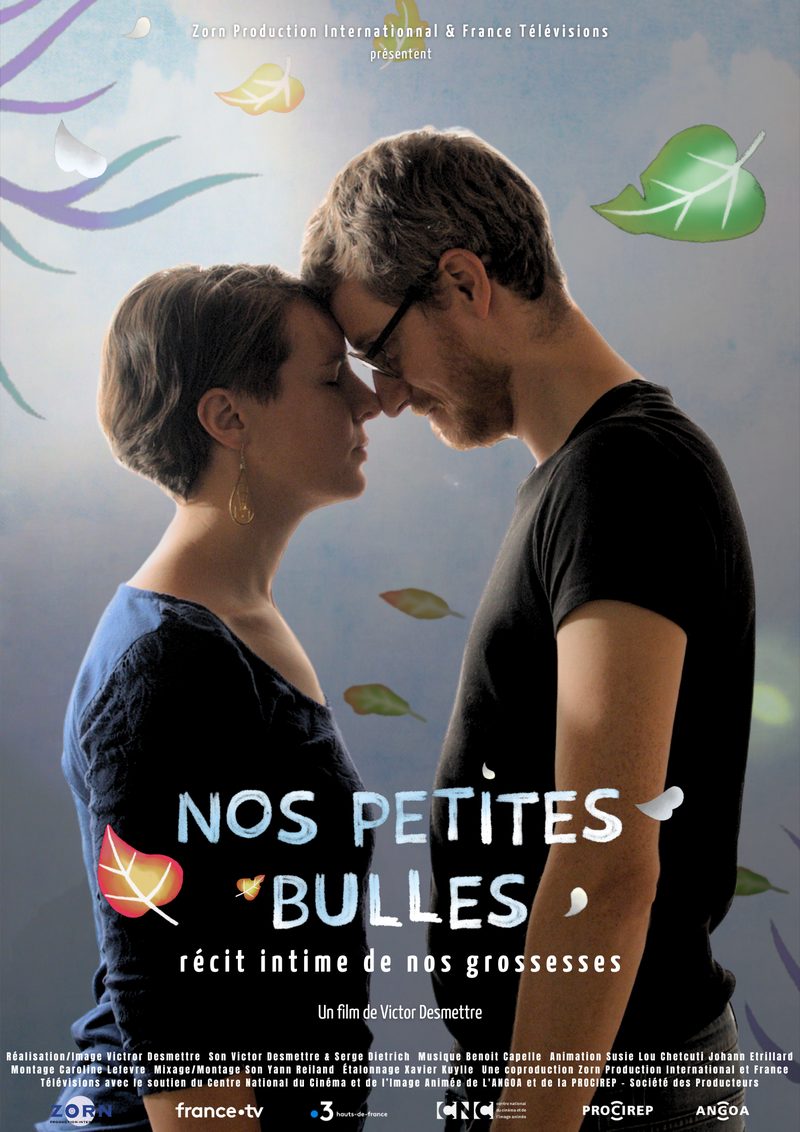
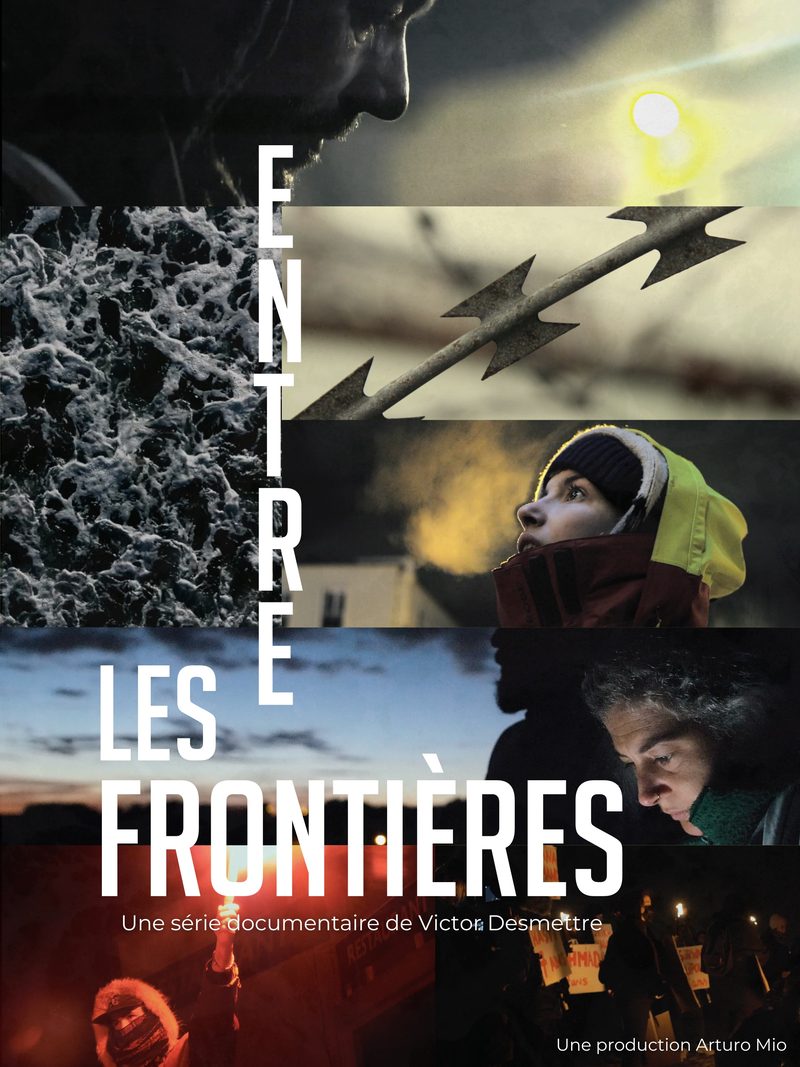
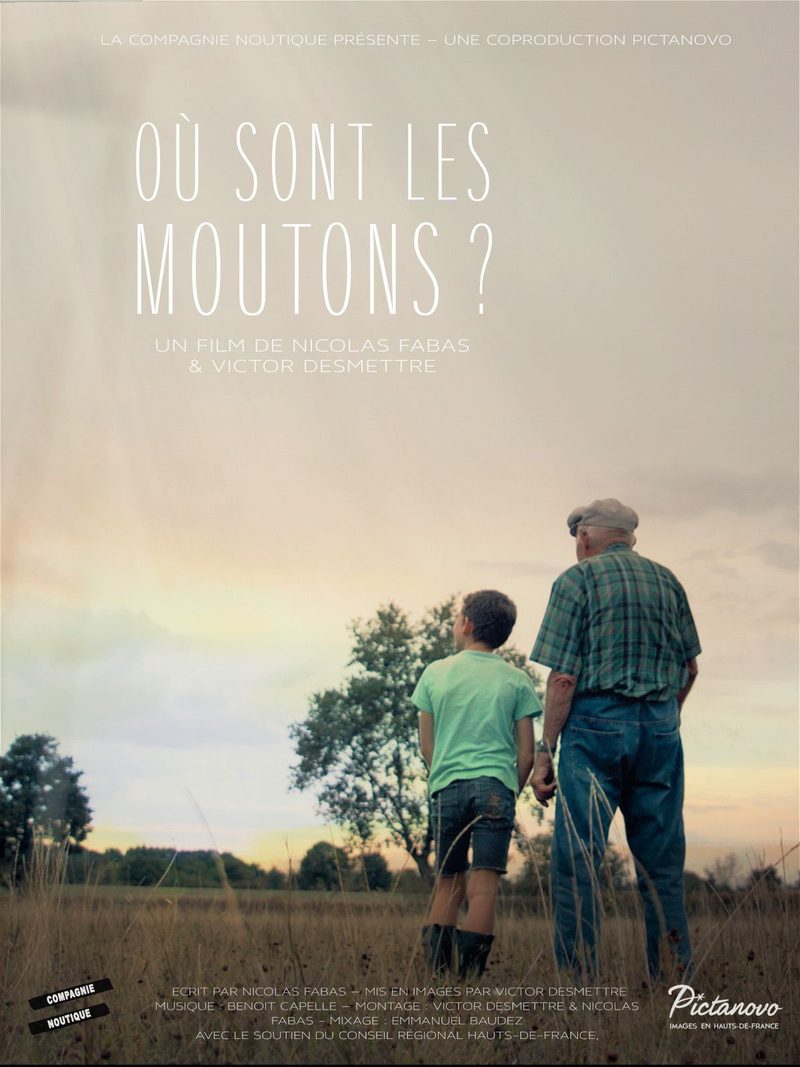
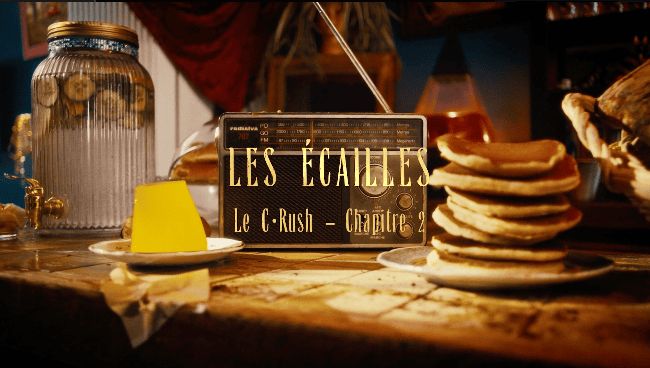
- Nos Petites Bulles (Our Little Bubbles) (2024) - Documentary, 52 minutes - Zorn Production International - France 3 HDF
- Entre les frontières (Between the Borders) (2023) - Documentary series, 87 minutes - Arturo Mio
- Où sont les moutons ? (Where Are the Sheep?) (2022) - Documentary, 52 minutes - Cie Noutique
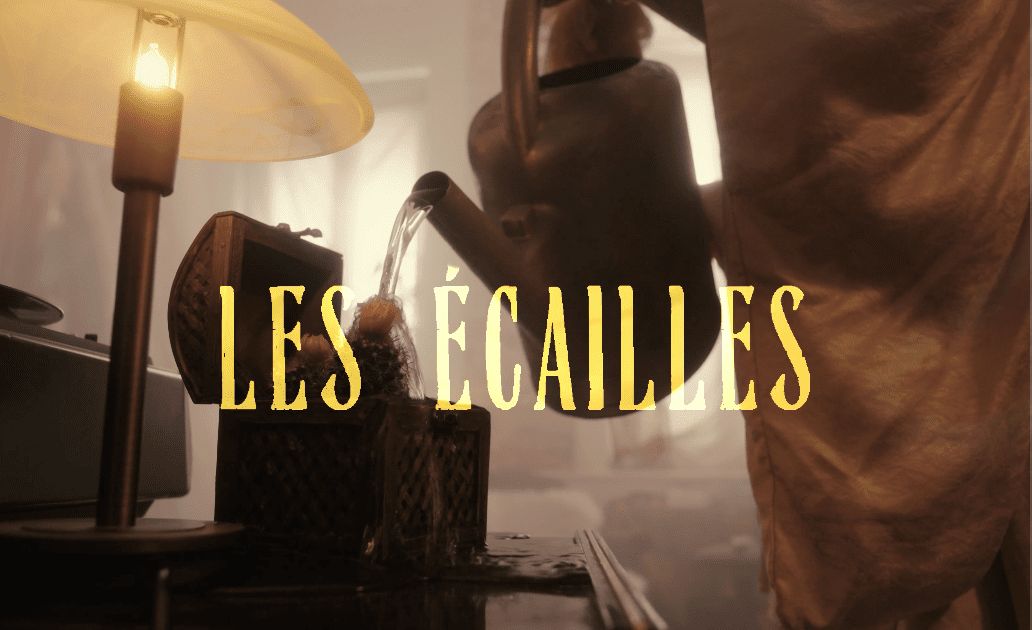
- Les Écailles - Part II Le Crush (2022) - Short film, 13 minutes - Just Kidding Production
- Les Écailles - Part I Le Réveil (2021) - Short film, 7 minutes - Just Kidding Production
Composer · Original music
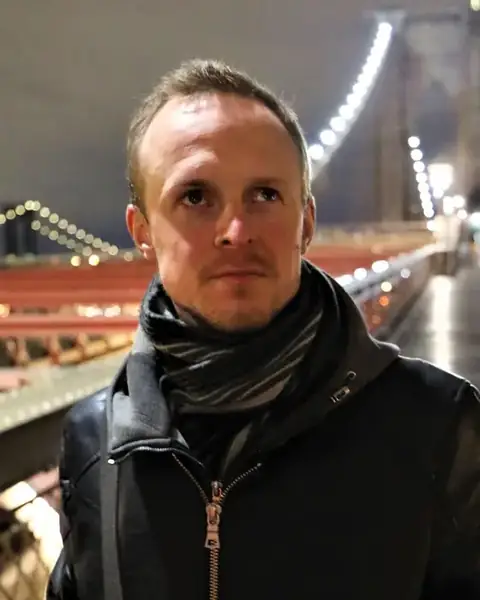
Benoit Capelle
Benoit Capelle composes and produces music for documentary films and live shows. Trained at the conservatoire, where he was awarded a gold medal in the higher preparatory diploma, he has been following the Writing and Orchestration course at the Lille Regional Conservatoire since 2022.
A keyboard player and arranger for more than ten years on many musical projects, he wrote the music for the show DayDream, then for two of Victor Desmettre’s films: Où sont les moutons ? (Where Are the Sheep?) and Nos Petites Bulles (Our Little Bubbles). He also composes and arranges for the projects Fe and Max M.
- Nos Petites Bulles (Our Little Bubbles) (2024) - Documentary, 52 minutes - Music composition and production
- Où sont les moutons ? (Where Are the Sheep?) (2022) - Documentary, 52 minutes - Music composition and production
- DayDream (2018) - Live show - Music composition and production
- Project Fe (since 2019) - Composition and arrangements
- Project Max M (2018 - 2022) - Composition and arrangements
ARTURO MIO · Producer
Caroline Roussel
Caroline Roussel earned her degree in Literature and Film at Paris III before joining La Fémis in 1987. She graduated from its Cinematography Department in 1990.
Building on that experience, she decided at the end of 2000 to create Arturo Mio in order to develop and produce her own projects.
Caroline Roussel graduated from EAVE in 2002.
Production
Arturo Mio
We produce TV single films, collections and feature films with the same ambition, in fiction as well as documentary, because we are convinced that fiction is only another point of view on reality. With one and the same requirement for every project: the originality of the authors’ vision, which guarantees works with a strong identity.
Offices: 38 rue des Sarrazins - 59000 LILLE · www.arturomio.com
Team: Anne-Sophie Tréchot - Executive producer & Arnaud Milville - Production assistant.
Press, broadcasters, partners
Resources
- Title
- The People We Disappear
- Genre · length
- Documentary · 52 min
- Director
- Victor Desmettre
- Production
- Arturo Mio
- Development support
- Pictanovo, CNC, Procirep-Angoa
- Locations
- Opal Coast
- Schedule
- [Shooting and delivery dates]
- Broadcast
- [Broadcaster to be confirmed]
Contacts
Write or call
What now
Does this film speak to you?
The film is still being made. There are several ways to take part.
Discover my work: promotional, fiction, documentary
COPYRIGHT © 2026 created by VDVISUALS, film director and videographer in Lille, Paris and Brittany
